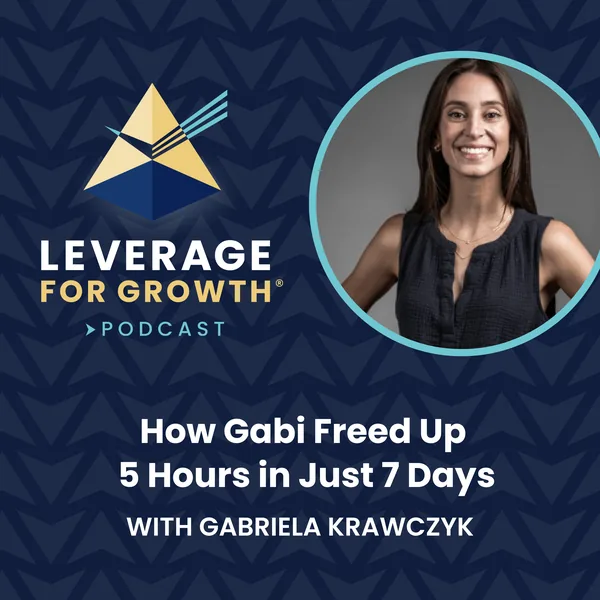
How Gabriela Freed Up 5 Hours a Week in Her First 7 Days
Gabi Krawczyk freed up five hours a week in her first week of the Free Up Founder challenge, and most of those hours came out of reactive work.
Listen to This Episode
LEVERAGE FOR GROWTH® PODCAST
April 28, 2025
Struggling to make sense of your agency's numbers? In this episode of the Leverage for Growth Podcast, Jesse Gilmore sits down with Hayden Cox—Partner & Chief Product Officer at CleverProfits—to break down how simplified financial frameworks can give agency owners the clarity they need to scale with confidence. You'll discover: ✅ Why most agency owners misread their numbers ✅ The 3 metrics that matter most for sustainable growth ✅ How much cash you really need on hand to stay sane and strategic ✅ How to spot financial friction before it tanks your momentum If you're ready to stop guessing and start scaling, this episode is your roadmap.
Connect with Hayden Cox & CleverProfits here: Web - https://www.nicheincontrol.com/cleverprofits Facebook - https://www.facebook.com/CleverProfitsServices Youtube - https://www.youtube.com/CleverProfits LinkedIn - https://www.linkedin.com/company/cleverprofits/posts/?feedView=all X - https://twitter.com/CleverProfitsUS Instagram - https://www.instagram.com/clever.profits/ Cleverprofits believes every business deserves a financial partner who truly cares. They’re not just about numbers, they’re about people. That’s why they offer direct access to your financial expert and a humanistic approach that puts your success first. Their CFO's, like our very own Hayden Cox brings years of experience and a genuine passion for helping entrepreneurs navigate their financial journey. With Cleverprofits and their dedicated CFO's like Hayden by your side, you’ll find the support and guidance you need to grow your business with confidence.
This transcript is lightly edited for readability.
Jesse: Today I'm here with Hayden Cox, the partner and chief product officer at CleverProfits, where he leads fulfillment and financial strategy for agencies. Hayden and his team at CleverProfits help agency owners gain clarity and control over their numbers using a proven framework that demystifies financial decision-making. Thanks for coming to our show today, Hayden.
Hayden: Yeah, thanks for having me, Jesse. I'm looking forward to it.
Jesse: Awesome. Can you tell us a little bit more about you and CleverProfits?
Hayden: Yeah, absolutely. The brief overview on me, because that's less interesting than CleverProfits, is I have a background in financial statement auditing, working for a public accounting firm. I got into it because I was like, "Oh, you get to ask any question you want and you get access to numbers." I feel like I've always been curious about how much things cost. And when I learned that I could see people's payroll, I was like, "That's awesome." And then I realized, oh, this isn't very much fun, because you're not looking at what's happening.
You're acting as if all of the business is around what's already happened in the financial statements. And when you would talk to the business owners or companies, they're just not even focused on that. So that's when I wanted to shift and join CleverProfits, and I became one of the partners here after a couple years. At CleverProfits, to try to make it simple, we just try to simplify the financials and the accounting so that business owners can make more decisions.
While an accountant isn't necessarily going to be the person that helps you acquire more clients, hopefully they can be the person that gives you better information so that you can make better decisions. And I think that's where CleverProfits tries to sit with our clients and really partner with them.
Jesse: And in talks that we've had back and forth, and obviously you're a part of our mastermind and we've gotten to know each other over the last few months, you talk a lot about how businesses are really only as good as their decisions. Why do you believe that finances are so often an overlooked piece of those decisions?
Hayden: Yeah, I think specifically for me, having been somebody who thought every number was really important: if everything's important, nothing's important. I think that's actually a big issue for people. There's so much built up around accountants. It is a profession where you need licensing, depending on what kind of accountant you are, and there are more rules and regulations around it. So I think the profession does it to themselves, and they create this big barrier to entry that makes it hard for people to feel like they actually understand it.
And so when you're looking at 30 different lines of numbers, which one are you focusing on? What is this even a yardstick of? Is it good? Is it bad? And so then it's, okay, I'll look at my bank account, because people know what their bank account means. So I think that's a big piece of it. How does that resonate with you?
Jesse: Yeah, a lot of times, especially for marketing agency owners, they have a lot of different metrics, whether it's from what they're managing for clients or for themselves. And sometimes the finances are probably one of the last things that they look at, and a lot of times they don't have a lot of time. So what are some of the common blind spots that you see when people are thinking about finances or financial metrics that come into that financial model?
Hayden: Yeah, like anything, there are layers to it. You can start high, you can go low, but I think having an understanding of where you are relative to everything, starting off at a bird's eye view, is important. For businesses, it can be summed up with: what's your cash in the bank, and then where are you going. Where you should probably drill in is where you're going, and that should be informed by where you've been. From a very high level, if you're going to look at numbers beyond the cash in the bank for where you're going and where you've been, it's going to be what your labor looks like, or really, where's your largest expenditure.
Most of the time it's going to be labor. The most finite resource for everybody is their own individual time, and so that's going to be the largest premium however you package it. If you're a software company, it's going to be in development. So it's in that piece, and then I would say also in client acquisition, whatever that looks like. Because if you are solely dependent on fulfillment and there are no new clients coming in, eventually that candle's going to burn out.
So how do you get another candle, get more wick, get more oil? Those are the two big ones I would focus on at a quick level, and then just continue to double click, drill down and understand them more as a business owner. But you can't do it all at once. That's my take, at least. I've tried getting into things, and how do you eat an elephant? One bite at a time.
Jesse: Yeah. And one of the things that you talked about in previous talks is the P&L Playbook. It's a financial model that a lot of our agency clients use, and I know you guys are big proponents of it. Can you talk a little bit about what that is, and maybe those three main drivers: profitability, growth and life?
Hayden: Yep, absolutely. The genesis of it really came out of trying to make sense of all the different numbers that there can be in accounting. If you were to reduce it but still maintain the essence, how do you do that? Our big focus is actually on trying to arrive at a cash balance that's appropriate for the business and where it is at. So, mitigating risks. I don't think there's a silver bullet to business. I think the successful entrepreneurs out there are the ones who have a propensity to fail and not care, and who have also figured out how to manage and mitigate that risk.
So that's our approach: the more cash you have, the more opportunities you have for failure that aren't detrimental. And we worked our way back through the financials. We try to put things in common size, meaning as a percentage of a number. That way, if you're at 50K a month in revenue or 300,000 a month or 40 million, the principle should still apply relatively. It focuses on client acquisition, on your actual fulfillment, your labor team, and then everything else in the business.
It reads like a story, is how I like to think of it. How much money did you make in a month? How did you acquire those clients? That's client acquisition. How did you fulfill on that delivery? And then what are the other things that are the glue that keeps things together? And what you should be left over with is hopefully some profit, and the amount of that is going to tell you a lot. So to put a number to it, for done-with-you or done-for-you agencies, client acquisition could look a variety of different ways in its actual channels and mechanisms, but typically it's about 10% of your topline revenue.
45% of topline revenue is going to go toward your team. And what's included in the team is all the different departments. It's not just the people fulfilling. It's going to be sales, ops, marketing, and your actual fulfillment piece. There are a bunch of different things you can drill down into there. And then the overhead, the glue that keeps things together, is typically about 15%. That's a very quick litmus test. There's definitely nuance to that.
It's the rule, but there are plenty of exceptions.
Jesse: Absolutely. And for anybody that may not have a financial model that they're currently using, now that we've got those percentages, what would be a way of starting, or getting to a place where they can assess where they are today?
Hayden: Yeah, I think a necessity is to have historic financials. If you have an accountant, hopefully you have financials produced from that, and you may need to rework them a little bit. Oftentimes there's payroll labor and contractor labor, and it doesn't have to be exact. But the thing that I like about financials is they just don't lie. That's the ultimate source of truth. Accountants are typically not the vanity metric people, so it's hard for them to say, "Oh yeah, great job on this." It's just their numbers.
So I would do that. And I really think so much of business comes down to the fulfillment, your labor. We talk about fulfillment and client acquisition together as the golden ratio. Between those, you want to be at 55%. If you can be there regardless of the scale of your business, say you're at 10,000 a month in revenue and your inputs are about 5,500 a month, you know that you should in theory be able to grow that business sustainably. There's enough product market fit.
So that's where I would start: if you have financials, try to rework them so you can understand what that looks like. And maybe it doesn't need to be on a one-month basis. A quarter, two quarters, that sort of thing. We typically look at the last 12 months to get a picture, because there are ups and downs in businesses and seasonality. If you look at everyone's ad spend campaigns during election season, it's going to look very different. Does that give a helpful starting place?
Jesse: Yeah, absolutely. Looking back on past financials, understanding the model of the 55%, which you call the golden ratio, and understanding that there are ebbs and flows in the business. Especially if they're on a monthly recurring model, it might be different than a project model. So getting to understand that is a great call.
Hayden: It does make a big difference, your revenue cycle, I would say. So having a fundamental understanding of that matters. If you get paid all up front for one year, then looking at your revenue in December probably doesn't paint the picture, because you collected everything in January. So you need to look at it holistically. Great call out.
Jesse: Yeah. And you talked about the ebbs and flows of business. What have you found to be the benefits of having a financial model that you can come back to center on, as opposed to not having one?
Hayden: Yeah, I think it's like a guiding star, if you will. I don't actually know how to read the stars. Maybe you can read the stars and pinpoint where you actually are, but I think it gives a general direction. As a business owner, your business is actually the summation of your decisions, and you're making so many that it's hard to know: wait, did I just go forward? A lot of the time in business, it feels like somebody turned off the lights, there's a ton of fog, and you get these little wins along the way, but the world isn't waiting for you to take a breath.
So how do you take a look and evaluate whether you've gone in the right direction? As business owners, we should always have a thesis or a hypothesis about what's going to happen. Then how do we know? That's where I think the business model can really help: coming back to the center, this equilibrium, where okay, I went in this general direction, like the star that way is north, or like a compass, almost. It's not perfect, but it definitely helps you find some sanity in what I think is a complicated and difficult world, just shown by the rate at which small businesses unfortunately fail.
So maybe I would shift it to: why wouldn't you try to stack the deck in your favor when the deck already isn't in your favor? Everyone else is trying to win too, and to some extent it's a zero sum game. Not always, but there can typically be only one person that provides a solution. So what's your take on that piece?
Jesse: Yeah, I think it would be really good to talk about the cash on hand piece of your model. Whether you have monthly recurring revenue or projects doesn't really matter. There's seasonality, and everybody's experiencing it, especially in the agency world right now. And granted, at the time of this recording it's tax day, which is a perfect time to do this.
Hayden: It's a great time for me.
Jesse: Well, I think getting to a place where you're financially abundant, at least in mindset, comes down to actually having cash on hand. So can you talk a little bit about what a model for the cash on hand piece looks like? Maybe a benchmark, anything around there?
Hayden: Totally. This is going to be geared toward non-regulated and non-heavily capitalized companies, so mostly it's going to be service-based businesses of some nature. I won't go into why I excluded those other two. With those, it depends on the volatility of what's happening in general and also on the business owner's comfort level. We would say a business owner, depending on how they're structured, shouldn't start taking money out of the business as a reward for being a business owner until a certain point.
Definitely pay yourself for the time. You are a contributor. But for the benefits of ownership, you typically wouldn't want to start taking money out until you have two months of cash on hand. What that means is if, on an average monthly basis, you're spending $50,000, two months would be $100,000 that you want to have in your bank account. You can leverage that a little bit with credit cards, but we typically like to look at it as net, because you're going to have to pay the credit cards or you're going to pay 18% interest.
It just doesn't make sense. There are better ways of financing. If you have a 0% 12-month card, then fine, maybe exclude that, but again, you're going to have to pay it eventually. So I think of that as the lower barometer. And then we typically try to aim for 90 days, three months. Said differently, if you lose all of your clients at once, you have three months to continue to operate exactly as you are before you can't make payroll. And typically that's not how business works.
You usually lose a little bit at a time, or you might have a big chunk taken out at once, but it's not this rapid overnight sort of thing. So that's where we would aim. I've heard Sam Ovens say closer to a year of cash on hand, which is totally fine. I think the bigger thing as an owner is making sure that you're getting rewarded, because owner burnout is the worst thing. You're the biggest asset, the most valuable thing. And then making sure that the money is doing something.
You just don't want it collecting dust, especially when inflation is wild. That's the worst thing to happen. So if it's kept in the business, no problem. Over 90 days, I'd recommend putting it in something that can get you a little something in return and keep up with the pace of inflation. But 90 days highly liquid is our general thought on it. It just helps mitigate the ebbs and flows that will come that you don't know about.
Jesse: Mhm. And the reason I led toward that topic is that, talking with agency owners, which is what I do nonstop and you do as well, there's a lot of disruption going on. And I think the ones getting hit the most are actually the smaller agencies. There's always a storm brewing when it comes to disruption or technology or the reorganization that's needed within a business, especially right now. And I talked about that because I think cash on hand creates the ability to adapt to changes.
And like you said before, even if a disruption does happen, it doesn't normally happen completely overnight, right? It's going to happen over a period of time. So let's run a scenario. Let's say the person listening right now is an agency owner with a six-figure agency, and they know that clients are going to get nervous about cash and they're going to have to weather a season. Aside from just getting more cash on hand, what's the best way to weather the storm?
Hayden: Yeah. If they're feeling things drying up on the client side, I would say first and foremost, everyone should always focus on optimizing their offer, their product. I was thinking back: if there's one thing I wish I had done more of in 2024, and even previously, it's just doing more of that, because I don't think doing more of that results in a losing equation. And it's a hard thing to do. People are always changing. They're evolving. And especially with clients, you're always trying to win them over, so how do you stay at the forefront?
So I think that's the best place. But say they're doing 100K a month in revenue, and there seems to be something coming where it's going to be harder. You're either going to have to fight more to get new clients, or new clients are shopping more, and they're driving down their willingness to say yes to certain price points. Things are going to contract. I think it's really taking a serious look at where you currently are with your cash. If you don't have enough cash on hand, that's pretty concerning, and it's going to be a really hard thing.
And identifying the piece that is sucking that money out, the biggest drain on the system, and making sure that it's optimal in terms of its return. If it's just taking money out of the business, for myself it's probably my wife and kids, and I'm not going to cut them off, right? But understand that's a piece of the equation. And I'm a big fan of having a line of credit with banks. You don't have to pull on it if you don't want to, but it can be there as a safety net, and it gives you the ability to take chances.
Entrepreneurs are risk takers, is my take. Fundamentally, they're risk takers, and they're going to be engaging with that. And if you take that away from them because they're worried about where the money is or where it's flowing, I think that's also when businesses start to decline. That's not to say operate with an abundance mentality where things will just work out. No, that's part of the risk. But continue with the things that got you to that point if it's a macro market thing, because you've already proven that you can compete in the market, and it's a matter of staying with it.
On the flip side, I would say if you have exploited a gap in the market and now that gap has closed, and you've rested on your laurels, it's going to be really hard. I think Blockbuster is an example. They were everywhere, and then Netflix came along, and there was even a time when Netflix was around and Blockbuster didn't evolve. And to Netflix's credit, they went from DVDs to all streaming. I don't know if you can get a DVD from them anymore. That's an example of somebody who probably went with the tides well, versus poor Blockbuster.
Jesse: This is the first podcast that I've done where Blockbuster has been a topic.
Hayden: I'm having to go back in the archives. I need to freshen up.
Jesse: Thank you for diving into that. Just in summary, I think anybody that's experiencing some type of disruption, with clients constricting or budgets or anything like that, should look at the financial model Hayden was talking about: net sales, then the 55%, which is the golden ratio, 10% going toward marketing or client acquisition, 45% toward fulfillment, and then 15% for overhead. If you're not at that model and you don't have two or three months of cash on hand, it's time to start focusing on that.
It's not a question of whether there's a storm. There is a storm. So make sure that you're set up correctly.
Hayden: Totally.
Jesse: And Hayden, if someone listens to this and they're interested in learning more about CleverProfits or want to meet with you, what's the best way for people to get in touch with you?
Hayden: Yeah. We'll have a call link in the show notes, but you can also just go to our website, cleverprofits.com. On there you can see our social media links, YouTube, Facebook, whatever your preferred medium of consumption is. But I think a good way is just talking to us. I think we're pretty straight shooters on things, and there are plenty of resources out there to learn more about us as well.
Jesse: Awesome, Hayden. Thanks so much for coming on the podcast.
Hayden: I appreciate it, Jesse. It's an absolute pleasure. Really enjoyed it. Thank you.
Transcripts are auto-generated and may not be 100% accurate.
Gabi Krawczyk freed up five hours a week in her first week of the Free Up Founder challenge, and most of those hours came out of reactive work.
Listen to This Episode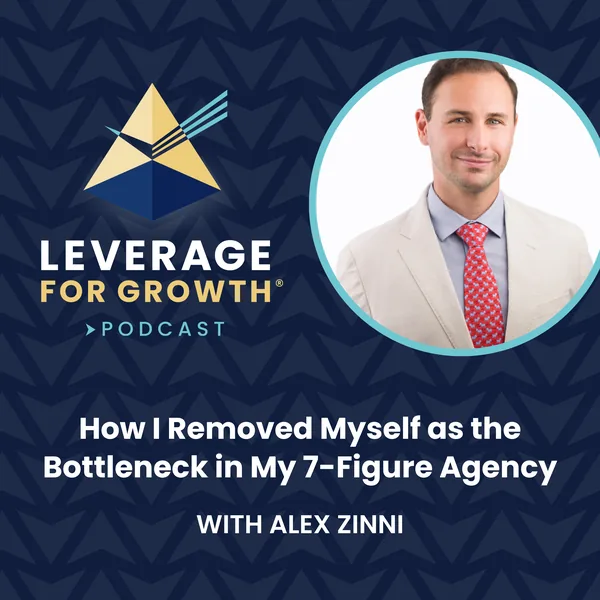
Alex spent a decade as the bottleneck in his own 7-figure agency. In 4 months inside the Leverage for Growth method, he built the systems to step out of it.
Listen to This Episode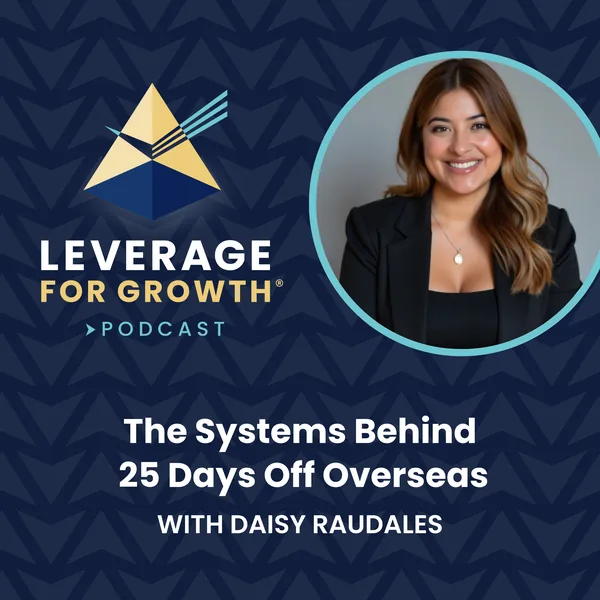
Daisy Raudales spent 25 days in Europe and her PR agency did not fall apart. She went a little viral for saying so.
Listen to This Episode