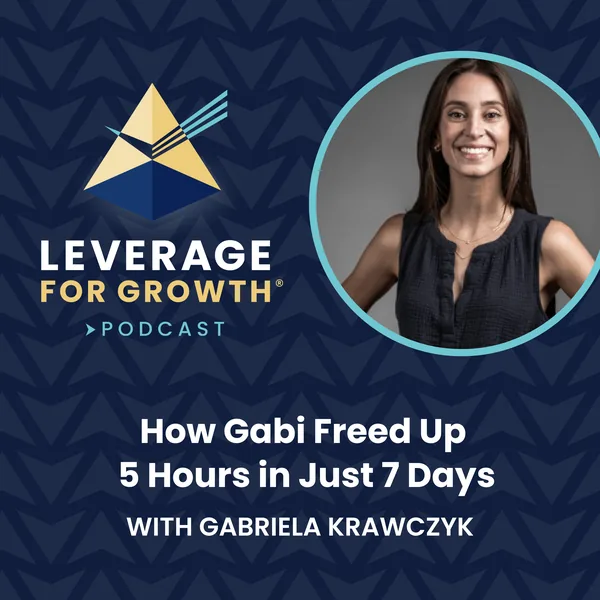
How Gabriela Freed Up 5 Hours a Week in Her First 7 Days
Gabi Krawczyk freed up five hours a week in her first week of the Free Up Founder challenge, and most of those hours came out of reactive work.
Listen to This Episode
LEVERAGE FOR GROWTH® PODCAST
June 23, 2026
Robert Bradley hit his 18-month impossible goal in three months — and he did it without working nights and weekends. As the founder and CEO of Chorus GTM, a RevOps and go-to-market engineering agency, Robert spent his early years building a solid cold outbound agency that grew fast but felt hollow. The productized model, the factory-like systems, the transactional client relationships — it was working on paper and draining everything else.
In this episode, Jesse and Robert unpack what actually changed. It wasn't a hack or a new lead source. Robert rebuilt his offer around his genuine core competency — RevOps and AI-native go-to-market engineering — and stopped trying to fit into a model designed by someone else. The result was a 3x on gross profit in a quarter, mid-market clients who see him as a strategic partner, higher retainers, lower churn, and a life he actually wants to be living.
If you've been following a well-trodden path that's technically working but doesn't feel right, this episode is the one to listen to.
Topics covered: escaping the cold outbound trap, the offer triangle framework, aligning your agency offer with your actual strengths, moving upmarket by speaking to core competencies, and defining success that includes your personal life — not just your P&L.
Connect with Robert Bradley & Korus GTM -
Korus GTM — https://www.korusgtm.com/
Robert Bradley on LinkedIn — https://www.linkedin.com/in/robertbradleyai/
This transcript is lightly edited for readability.
Jesse: I'm here with Robert Bradley and he had an awesome win. And Robert, can you just introduce yourself real quick to the audience and what was that big win that we're talking about today?
Robert: Hey guys, I'm Robert Bradley. I'm the founder and CEO of Korus GTM, a RevOps and go to market engineering agency, and we had a great win. We, our target for 18 month impossible goal was a certain bottom line gross profit, and we actually hit that in three months.
Jesse: Dream big and get it done in three months. That is so cool. And when we started thinking about kind of unpacking that, how did it feel to hit that goal?
Robert: It felt amazing like to actually re-engineer the business around goals, both business and personal and like design a business that I'm happy to feel fulfilled with works well with not only my business, but personal goals as well. And then that to also hit the numbers that I want to hit. It's, it's super rewarding. It's why we do this in the first place.
Jesse: And when we think about it, you don't have to share the actual numbers, but are we talking about like a two X, a three X, and just for the audience? Yeah, it was a three X, three X. So, so cool. and let's bring us back. So when you had shared this with me, one of the first things I asked you, do you remember what that question was? Like you hit the revenue goal and I was like, hold on. And then I asked you a question. What was it?
Robert: Yeah. Are you still working nights and weekends?
Jesse: And, and what was the answer?
Robert: The answer is no. I actually have my life back as well. It's great. Yes.
Jesse: It's, it's so key. and one of the cool things about working together and, we've worked together for a while now, is you have a lot of these core values, these personal values, and when you started looking at all the different kind of options out there, when it comes to growing and, the agency and definition of success, you had certain values that you wanted to uphold to make sure that when we hit whatever the revenue amount was or the profit amount or the take-home amount, that you had those in place, what were some of those values that you held and you want to make sure that you had that definition of success with?
Robert: Yeah. So for me, it was very important and kind of like the, you know, early, I wouldn't say mistake, but learnings from like starting an agency and kind of going down this well-trotting path where you've got all these people out there doing this certain model and like you've got the growth gurus and out that are out there hustling grind. And, and for me, we had a solid growing agency. It was growing very rapidly designed for scale, but it just didn't feel right in a lot of ways. And for me, the core value is like, you know, being a present father, like, you know, we do this for a reason. And I want to have be able to be there on weekends or take the vacation here and there to spend quality time with my family. And how I had things structured before was making it very difficult to achieve those other slices of the pie of life. And so redesigning the business, to something that takes care of my family, but also allows me to be there with them was super important for me.
Jesse: Absolutely. Being a father myself, I understand the need for a certain priority and being able to have that, and, that wasn't necessarily the, so before working together and what actually started, working together was things were not like that. Can you kind of bring us back just a little bit to, what was life like before working together and, kind of paint a picture, for the audience?
Robert: Yeah, definitely. So I started my agency. You know, I was, diving very much into Clay. We're official Clay solution partners. There's a lot of Clay agencies out there. And one of the core use cases around it was like doing outbound, you know, done outbound at every organization that worked at, my career and it was a natural fit and a well trodden path of like, there's a bunch of successful agencies doing this model. Let's sort of go down that path. And, you know, it worked, it worked well. We, we had a lot of success. We grew, we had a bunch of clients. But everything was designed around, you know,
Productizing, systematizing growth. It's, it's a difficult market. You know, there's a lot of churn involved with, you know, kind of pure cold for cold done for you outbound. so we had lots of success, but there's a lot of pain as well. And, designing around growth just felt like this factory where, you know, we've got these well laid out systems and processes, people come in, we go through it, test iterate, see if we have success or not iterate from there. But, you know, you're, you're almost like this factory system and you've got people coming in the door and they're working through this and it just wasn't, it didn't feel like the right model for me and my business. I found myself more disconnected from the clients. and I really wanted to get back to being much more strategically involved to where we could like really make a difference in a lot more aspects of their business.
Jesse: It's interesting because when you're focused around following what had kind of been like a proven model based around gurus or this like productizing kind of version, first off, it didn't fulfill you number one, and then second half it felt cold, which is kind of ironic with the cold outbound and then cold. And, what kind of like, what was kind of like that spark? what was kind of like that moment where you're like, something needs to be different, you talked about the structure needing to be different just a little bit ago or structural approach, but, how did you know that something needed to be different?
Robert: Yeah. So it felt limiting to like kind of pigeonhole, a productized set of services and like scope of work. There was one client who came in and they had a clear glaring need on the inbound side, And it wasn't like, you know, a part of our typical services. And we're kind of like just going above and beyond to try and make something else happen for him. And we literally five, six X their inbound conversions in like a week. And you know, they're getting a good amount of inbound. So we're generating a lot more business for him, justifying like the entire, you know, six months of our engagement in a two week time span. And knowing my background as RevOps, like there's so many more areas that I have expertise that we can help out within these businesses and that just turned on the light bulb. Like, why am I pigeonholing our business into a very niche, and just one sort of like, you know, top of funnel pipeline generating opportunity versus getting digging into the business and finding so many more ways where we can optimize.
Jesse: And it's really cool because, when you kind of started realizing first off that your previous background, you have a certain unique ability that is not necessarily the model that is being carbon copied out there. And then you start to understand a bit more about the value that you offer. And then also, the values that you have that you're trying to structure the business and we kind of went on a journey together in the way beginning, kind of figuring out what is that unique ability, the key study, that you're talking about where you're starting to get out of just outbound and starting to look at what is actually the differentiation, not only like differentiation in the market for the agency, but then also based on your core competency, kind of talk through a little bit of the strategy that we had gone through, whether it's, the Scalable Agency Accelerator or specific parts of looking at that offer until you get to where, you made the switch.
Robert: Yeah. So I think it was when we were kind of going through like the core, Offer Triangle and just mapping like kind of our core competencies and capabilities. To what are the direct pains that, these prospects are typically, struggling with and like mapping that initial Offer Triangle out, then extrapolates into, okay, how can we design an offering that addresses these core competencies and capabilities that we offer that map directly to pains and solutions that these, companies are looking for. And then that led to us kind of holistically reworking our offer and like addressing kind of all aspects of GTM with the, those core competencies.
Jesse: One thing I really like about the way that you described it. Okay. Now I'm too close to it because I'm always helping people with the method, but you immediately talked about mapping problems, big problems that they're experiencing, and then figuring out how you can make an offer that solves those problems. I think that is like so crucial to not only the structural part of an agency and figuring out how to make the offer resonate with the right types of people, but also to increase the value by which your offer is being, you know, producer or given to somebody. One thing that you didn't say was we're going to create new reports and new spreadsheets and new deliverables. It has more to do with the actual problem, being solved, which is a beautiful thing. how did that process was starting to work through the problems and the solutions and mapping out the offer. How did that start impacting who you were talking to?
Robert: Yeah. So, I mean, When we were doing kind of, the main offer being cold outbound, that was appealing much more to like seed series, a best, kind of startups, and we're just getting a lot more interest from people who just like very transactional, we just got to get some pipeline flowing right now. And once I started pivoting into our offer and messaging being much more RevOps centric, then you've got organizations who already kind of speak that language, who already have a RevOps function in place. And because we're leaning much more heavily into go to market engineering, which is a, you know, a lot of RevOps are kind of just busy keeping the lights on. And it's tough for them to sort of work into this AI native, go to market engineering type of motion and really push their organization forward. It became much more appealing to mid market organizations. The type of worked at, you know, myself previously, I'm speaking much more to my and our core competencies around revenue operations, you know, things like CRM enrichment, how that impacts, you know, different stages throughout the pipeline. What actions can we take? How can we, turn existing clients, spin that around into top of funnel content, thinking much more full customer 360 lifecycle type of, conversations is much more appealing to your CROs, your CMOs of the world who are at much larger organizations.
Jesse: You know, that's interesting as I'm just hearing it in your voice. Whenever you talked about, outbound, I was like, outbound. And then now you talk about like the RevOps and it's like, and then we get to do this and then there's what is, and that's a very interesting, I'm not like an energy person, but the fact that you're, you're, you feel more fulfilled by the things that you're doing. And you talked about core competencies. I think that's one of the things that, now I'm again, too close to it to see it all the time, but just noticing it in the way that you describe the new offering, it fills you up with energy. how does that start impacting sales?
Like, the feeling of actually core competence as opposed to selling a productized thing, something that you actually like have a huge background in. Right. Like CRO and type of work. And then, now when you talk with somebody, how does that impact?
Robert: Yeah, absolutely. So I, whenever I can, whenever I'm on a call with like a CRO or a head of RevOps or something, like they just clearly understand that we get it, that we know what we're talking about. We know the capabilities and like that we show them things that push them forward as an organization versus, you know, we'll get you leads and everybody's gonna be happy with that. But, it doesn't really push the organization forward.
Jesse: Mm-hmm. Mm-hmm. That's really cool. I think, you transitioned from the outbound service provider with deliverables and leads to an actual partner, like the partnership language. that's really cool, dude.
Robert: I think, Yeah. And the, you know, the core outbound piece of it was still like a good pathway for us to go through. Cause we learned a lot of things on like how to fully understand from top to bottom. Our clients, ICP had to develop detailed buyer personas, no matter what we do within the organization as strategic partners, how we act on that. If we understand those personas in depth and like, what are the, you know, KPIs they're measuring against, what are their wants, pains, fears, and aspirations. If we understand those people at an individual level, no matter who we're touching throughout that customer 360 lifecycle, we better understand how to speak to them and, you know, it often involves still an outreach step.
Jesse: Mm-hmm. It's kind of like you've been on a journey, which you know, you happen, but you've been on a journey and then that early stage, you were kind of like earning your stripes, following what was out there before. And then you got to a place where you went from startup to more of an established business or more like aligned with the way that you truly had a vision for the company in the way beginning. And it's really cool when that vision becomes a reality, not only from the financial side, cause I think that if I'm not mistaken based around what I know about you and what you're saying, today, if you would've hit the revenue amount, the profit amount, the take-home amount, but you still sacrificed the personal, that wouldn't be a success for you. Is that correct?
Robert: That would not be a success. Now, yeah, I'm really looking for a type of business that is fulfilling for me personally and professionally. And that's why, you know, you hear growth and scale and like, you know, pull yourself out of the business completely. And that didn't feel right for me. Like I want to be involved at least strategically with our clients and helping them to, you know, make important decisions and like, you know, a lot of these companies don't know how to navigate AI and put compelling workflows in place that actually move the needle in their business. And it's fun. It's exciting. And I like to be involved in that and it, you know, is not fulfilling for me to completely divorce and remove myself from being at the cutting edge of things.
Jesse: Mm-hmm. I love it, dude. I'm a, I'm a kind of take my own takeaway for the audience. And then I want to hear from you if you had a takeaway, for somebody else's listening, but the thing that I'm seeing just from, working together is first off dream big, that whole impossible goal of the 18 months, if you got really clear on what that 18 months or three years or whatever that end goal is a definition of success, I think that's one of the most important things that people need to have, they need to have something that they're working towards. That's more fulfilling and it's not just revenue. It's like a feeling of an outcome. I think that's the first thing. The second thing is understanding kind of where you are today based around that outcome and not to feel like really crappy, but just to understand kind of where you are and so you can start making some changes. And the third thing is I think that for anybody that is kind of in that, undifferentiated kind of role where like it's not cold outbound for everybody, but like full service agencies serving everybody is like, okay. and you realize that you need to create, the freedom, the time freedom, the financial freedom, and really the fulfillment, there is not going to need to be a change within the offer. I want to talk about in just a little bit. but I think that those are some of the big takeaways that I've taken so far. what takeaways would you have for other agency owners kind of listening to this?
Robert: Yeah. So I think, you know, there is a time and a place to kind of go down a well trodden path, at least like get some, get some things off the ground and get those initial learnings, but then from there it is how do you design the business to align with a your core competencies and skills, but also what you're passionate about. And those tend to align to each, to each other. you know, the things we're passionate about, we tend to be better at. and that was kind of our journey was like going from, you know, just kind of another, you know, cold outbound agency. There are some of those guys who run these people who run these agencies who are like, you know, the best offer crafter in the world. And they're so good at that. And they lean in on that. And then for us, it was like, there's so much, like we are systems and process experts and like building AI native workflows into all aspects of the organization.
So for us, it was moving beyond that into much more of these, you know, foundational CRM enrichment workflows, or how do we touch all aspects of the customer life cycle and like naturally fold in AI and company context into that. And that was just us leaning into our strength. And that's by doing that, we found, Oh, this is a lot more valuable of a service and we can multiple our retainers. Yeah.
Jesse: Yeah. And the, from what I know and what we talked about clients are happier. Client turns reduced. They're enjoying it. Like it's an amazing thing. What starts to happen when it comes to the alignment from a personal side and a professional side.
Robert: And I would add in rather than just being seen as a like tactical, more transactional, like executor as an agency, we're being seen much more like strategically within the organizations that we're like the seats at the table that we're at now are much higher up within the organization. And they're talking about like, how do we leverage their skills and capabilities more within our organization versus, you know, kind of like, let, you know, there's a specific angle, go hit that, get it done for us. It's a much more important and fulfilling relationship we have with our clients.
Jesse: I mean, you're less replaceable.
Robert: Yes.
Jesse: Just based around the positioning and, you finding that uniqueness. Sweet. Robert, thanks for sharing, the win and kind of unpacking it. for anybody that is listening right now, one of the things that I would suggest for you, if you're resonating with what Robert is talking about, maybe it's the offer change or making it to where you're, more differentiated and more based around your core competencies, not serving everybody for everything. my suggestion is you go through our Scalable Agency Accelerator program, which is basically what Robert is talking about right now. It's a seven step framework. you can get a free trial for the Offer Triangle, which is what, Robert was just talking about as well. you can go to nicheincontrol.com/triangle, and get your free trial today. So Robert, thank you so much for joining me. And I'm sure that's, will not be the only time that I have you on the podcast. So we'll have to do it again sometime soon.
Robert: Anytime. Thanks, Jesse.
Transcripts are auto-generated and may not be 100% accurate.
Gabi Krawczyk freed up five hours a week in her first week of the Free Up Founder challenge, and most of those hours came out of reactive work.
Listen to This Episode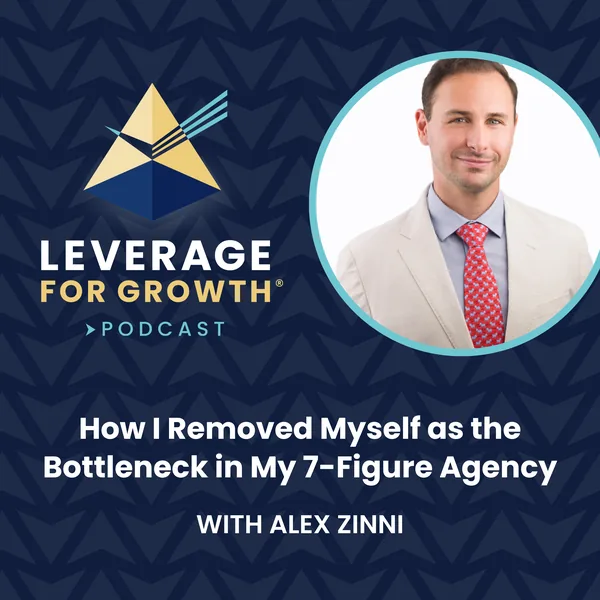
Alex spent a decade as the bottleneck in his own 7-figure agency. In 4 months inside the Leverage for Growth method, he built the systems to step out of it.
Listen to This Episode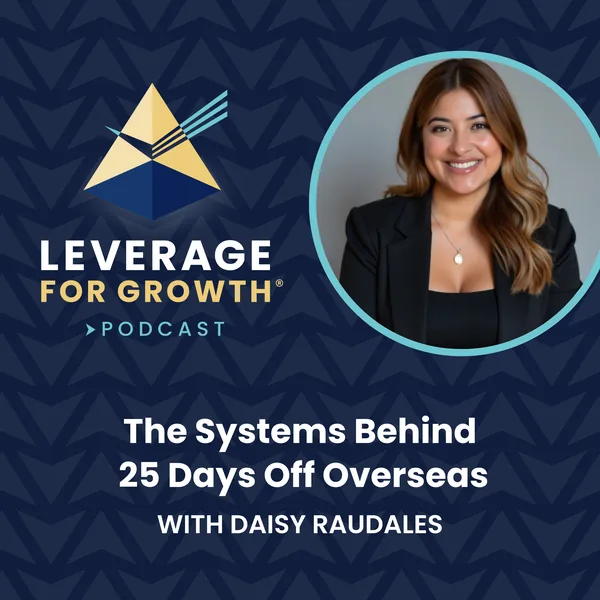
Daisy Raudales spent 25 days in Europe and her PR agency did not fall apart. She went a little viral for saying so.
Listen to This Episode